How to Choose the Best China Electric Chafer Supplier?
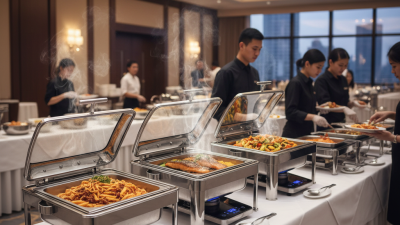
Choosing the best China Electric Chafer supplier requires more than comparing prices on a product page. A reliable decision begins with the equipment’s daily use. Consider hotel buffets, wedding venues, restaurants, and outdoor catering events. Each setting creates different demands for capacity, mobility, heating speed, and cleaning. A practical buyer should inspect stainless steel grade, water-pan depth, lid design, thermostat response, and handle strength. Small details matter. A loose hinge becomes costly during service.
Supplier verification also deserves careful attention. Request factory photographs, product samples, test reports, warranty terms, and clear production timelines. Confirm whether the supplier manufactures the Electric Chafer or only resells it. Review the consistency of welds, polishing, electrical components, packaging, and spare-part availability. Relevant safety documentation should match the destination market and the exact model. Generic certificates are not enough. Ask precise questions.
Price still matters, but the lowest quotation may hide weaker heating elements, thin metal, or limited after-sales support. Experienced procurement teams compare total ownership costs, including shipping protection, replacement parts, inspection, and expected service life. A video call with the production team can reveal useful details, such as assembly methods and quality checkpoints. Yet one conversation cannot prove everything. No checklist is perfect. Supplier performance can change, and buyers should reassess samples before larger orders. The strongest partnership combines technical evidence, transparent communication, realistic lead times, and a willingness to correct mistakes. That balance helps buyers select a China supplier with confidence, rather than relying on attractive promises alone.

Define Capacity, Heat Output, and Power Needs: Typically 300–800 W
How to Choose the Best China Electric Chafer Supplier?
Capacity, heat output, and power needs should guide your supplier search. Electric chafers commonly use 300–800 W, depending on pan size and insulation. A smaller chafer may work well at 300 W for breakfast service. Larger units often need 600–800 W to maintain safe serving temperatures. However, wattage alone does not guarantee even heating.
Ask the supplier for measured heating times, temperature stability, and test conditions. A reliable supplier should explain voltage, plug options, thermostat control, and circuit requirements clearly. I once focused only on wattage and overlooked heat recovery after opening the lid. That mistake caused slow warming during busy service.
Tips: Match wattage with food volume and serving frequency. Check whether the unit holds heat evenly across the pan. Request product drawings, electrical data, and inspection records before ordering. Test a sample with real food containers, not an empty pan. Small details matter. Supplier communication also reveals practical experience, especially when answers include specific measurements instead of vague promises. Check warranty terms and replacement-part support, because heating elements may eventually need attention.
Verify Food-Safe Materials: 304 Stainless Steel and NSF/ANSI 2
When choosing a China electric chafer supplier, verify the food-contact materials before comparing prices.
The inner pan should use 304 stainless steel, commonly known as 18/8 stainless steel. Its chromium and nickel content supports corrosion resistance around sauces, steam, and repeated washing. However, “304 stainless steel” on a quotation is not laboratory proof. Request a material certificate, thickness specification, and batch traceability.
NSF/ANSI 2
focuses on commercial food equipment hygiene, including cleanability, surface design, and construction. It supports practical checks for smooth welds, sealed joints, rounded corners, and drainable areas. The U.S. FDA Food Code 2022 also requires food-contact surfaces to be corrosion-resistant, nonabsorbent, smooth, and easily cleanable. Ask whether the complete chafer has been evaluated, not only whether its steel is certified. A compliant pan cannot compensate for a poorly designed lid hinge or a difficult-to-clean frame.
The World Health Organization estimated that contaminated food causes about 600 million illnesses and 420,000 deaths worldwide each year. That figure makes material verification more than a purchasing detail. Inspect sample units under bright light. Look for tea-colored rust, rough polishing marks, and exposed carbon-steel screws. A shiny finish can still hide weak workmanship. Some suppliers may provide incomplete documents; that is a warning, not a minor inconvenience. Confirm test reports with the issuing laboratory, review cleaning instructions, and reconsider any supplier who avoids specific answers.
Check Electrical Compliance: CE, RoHS, and IEC 60335 Documentation
When choosing a China electric chafer supplier, inspect compliance documents before comparing prices. A reliable supplier should provide a valid CE Declaration of Conformity for the exact model. The document should list the manufacturer, product code, applicable directives, and responsible signatory. A generic certificate is a warning sign.
Check RoHS evidence for restricted substances in electrical parts, cables, solder, and plated surfaces. Ask for laboratory reports that identify the tested model and report date. The report should match the chafer you plan to order. Small differences matter, including heating power, thermostat type, plug, and voltage.
IEC 60335 documentation also deserves careful review. Ask whether testing covers IEC 60335-1 and the relevant appliance-specific requirements. Confirm protection against electric shock, abnormal heating, moisture, grounding, and accessible surface temperatures. I would request a sample and compare its label with every document. Look for the rated voltage, frequency, wattage, warning symbols, and batch information. Paperwork can look convincing. It is not always complete. I once found a test report with an old model number, so I would ask the supplier to explain every mismatch in writing. Factory quality records, production photographs, and pre-shipment inspection reports can strengthen confidence, but they do not replace independent testing.
How to Choose the Best China Electric Chafer Supplier?
Use this compliance checklist when reviewing supplier documentation. The chart shows the maximum concentration limits for restricted substances under EU RoHS in homogeneous materials. Lead, mercury, hexavalent chromium, PBB, PBDE, and the four restricted phthalates have a 0.10% limit; cadmium has a stricter 0.01% limit.
Supplier verification: Request a valid EU Declaration of Conformity for CE marking, RoHS evidence covering the finished product and materials, and safety documentation or test reports referencing the applicable IEC 60335 requirements.
Assess Supplier Quality Through ISO 9001 and Factory Audit Records
How to Choose the Best China Electric Chafer Supplier?
Assess Supplier Quality Through ISO 9001 and Factory Audit Records
An ISO 9001 certificate is a useful starting point, not final proof. Check its certificate number, validity period, certification body, and production scope. The scope should cover relevant stainless steel cookware or electric heating equipment. A certificate for unrelated products raises questions.
Factory audit records reveal daily control more clearly. Request recent reports covering incoming stainless steel inspection, heating element testing, thermostat calibration, insulation checks, and final electrical safety tests. Look for batch numbers, inspector signatures, test values, and corrective action records. Clear evidence matters. Vague checklists do not.
During supplier evaluations, I also compare audit records with a live factory tour. Ask to see the testing bench, rejected units, and storage labels. A reliable supplier should explain why a batch failed and how the issue was corrected. It should also trace one chafer from raw material receipt to carton packing. Small details matter, such as dry storage for electrical parts and protective film on polished surfaces.
A polished certificate is not enough. I once treated a complete audit file as strong evidence, then noticed missing follow-up records. That mistake changed my review process. Documents can be prepared for inspection. Consistent production habits are harder to imitate. Verify them through samples, records, and direct questions.
Compare MOQ, Lead Time, Warranty, and Defect Rates Before Ordering
Choosing a China electric chafer supplier requires more than comparing unit prices. MOQ can affect your cash flow, storage space, and product testing plan. Ask whether the minimum order applies to one model, one finish, or the entire shipment. A supplier offering 50 units may seem attractive, but custom packaging could raise the real minimum.
Lead time should include production, inspection, packing, and shipping preparation. Request a written schedule with clear dates. For example, a 30-day production promise means little if inspection adds another week. Warranty terms also need careful reading. Confirm coverage for heating elements, thermostats, wiring, and damaged controls. Ask who pays for replacement parts and shipping. I once overlooked a warranty exclusion for commercial-use damage. That was a costly lesson.
Tips:
Request a pre-production sample and test it with food pans for several hours. Record surface temperature, power stability, lid alignment, and water-pan fit. Ask for defect-rate records from recent batches, not general claims. A low reported rate is useful only when supported by inspection data. Check how defects are counted and whether minor cosmetic faults are excluded. Compare replacement speed, communication quality, and corrective actions. A supplier with slightly higher pricing may reduce operational delays. Still, promises can fail. Keep every specification, tolerance, and remedy in the purchase agreement.