Inquiry
Form loading...

Top 10 Types of Stainless Steel Plates for Global Buyers

Choosing among Stainless Steel Plates is rarely a simple grade comparison. Global buyers must examine corrosion exposure, forming needs, welding methods, surface finish, thickness, and delivery conditions. A plate suitable for a dry food-processing room may fail quickly near saltwater, chemical fumes, or outdoor storage. Small details matter.

John C. Lippold, a respected welding metallurgy professor and co-author of Welding Metallurgy and Weldability of Stainless Steels, explains, “Stainless steels are defined as iron-base alloys containing a minimum of 10.5% chromium.” That chromium content supports passive-film formation, but it does not make every plate equally resistant. Grade 304 often serves general fabrication, while 316L offers stronger resistance to chlorides. Duplex 2205 can provide high strength and improved corrosion performance. Ferritic 430 may suit decorative or lower-cost applications.

The top ten types reviewed in this guide connect material choice with real purchasing decisions. They include common austenitic, ferritic, martensitic, duplex, and precipitation-hardening plates. Each section considers chemical composition, mechanical behavior, surface options, weldability, and typical industries. It also highlights practical risks, such as confusing a polished finish with corrosion resistance or accepting mill certificates without verification. That happens.

Specifications can still be misunderstood. Supplier reputation, independent testing, heat numbers, dimensional inspection, and traceability deserve equal attention. No ranking can replace site-specific engineering. Buyers should question assumptions, especially when price pressure encourages thinner plates or unfamiliar substitutions. The right choice protects equipment, production schedules, and long-term operating costs.

Top 10 Types of Stainless Steel Plates for Global Buyers

Stainless Steel Plate Basics: Grades, Properties, and Manufacturing Methods

Stainless steel plates are selected by grade, corrosion resistance, strength, thickness, and service temperature. The World Steel Association reported 1,892.2 million tonnes of crude steel production in 2023. Stainless steel remains a smaller but technically important segment. The International Stainless Steel Forum reported global stainless production at about 58.4 million tonnes in 2023.

The common ten-grade shortlist includes 304, 316, 321, 347, 409, 430, 410, 420, duplex 2205, and 904L. Grade 304 suits general processing equipment and architectural panels. Grade 316 adds molybdenum for stronger chloride resistance. Grades 321 and 347 resist sensitization near welding zones. Ferritic 409 and 430 offer lower cost and useful oxidation resistance. Martensitic 410 and 420 provide higher hardness after heat treatment. Duplex 2205 combines strength with chloride resistance, while 904L targets severe chemical service. No grade is perfect.

Manufacturing usually starts with slab casting, followed by hot rolling. Cold rolling improves thickness control and surface finish. Annealing restores ductility, while pickling removes heat scale. Plate may then receive cutting, leveling, edge preparation, or surface polishing. In practical purchasing, mill certificates should confirm chemistry, mechanical properties, dimensions, and testing standards. ASTM and EN requirements can differ, so a familiar grade name alone is insufficient. A plate that looks excellent may still fail after welding or exposure to saltwater. That detail is easy to underestimate. According to industry practice, application temperature, weld design, and cleaning conditions must be reviewed together before final selection.

The Top 10 Stainless Steel Plate Types by Grade and Application

Top 10 Types of Stainless Steel Plates for Global Buyers

The most useful stainless steel plate depends on grade, environment, and fabrication method. Grade 304 remains a practical choice for food equipment, tanks, and architectural panels. It offers balanced corrosion resistance and easy forming. Grade 316 performs better around saltwater, chlorides, and chemical processing equipment. Grade 321 handles elevated temperatures in exhaust systems and thermal equipment. Grade 347 suits welded components exposed to prolonged heat. These grades are not interchangeable.

Grade 409 is widely used for automotive exhaust plates, where heat resistance and cost matter. Grade 430 fits appliances, indoor panels, and decorative surfaces with moderate corrosion exposure. Grade 410 provides strength and wear resistance for industrial parts. Grade 420 can be hardened for cutlery, blades, and wear components. Duplex 2205 combines high strength with strong resistance to chloride cracking, making it suitable for offshore structures and pressure equipment. Grade 904L serves demanding chemical, pharmaceutical, and sulfuric acid environments. No grade is perfect. I have seen buyers select 304 for coastal service, then face staining near welds. Surface finish, plate thickness, welding practice, and post-fabrication cleaning also affect performance. Reliable purchasing requires checking mill certificates, test results, dimensions, and the actual service conditions before approval.

Top 10 Types of Stainless Steel Plates for Global Buyers - The Top 10 Stainless Steel Plate Types by Grade and Application

No. Stainless Steel Plate Type Common Grade Designations Typical Chemistry Key Properties Typical Applications Buyer Considerations
1 Austenitic 304 Plate ASTM Type 304
UNS S30400
EN 1.4301
Approximately 18% chromium and 8% nickel; molybdenum is not intentionally added. Good general corrosion resistance, excellent formability, weldability, and surface finish. Food-processing equipment, kitchen and catering equipment, architectural panels, tanks, pipes, and general fabrication. A cost-effective general-purpose choice. For chloride-rich or marine conditions, a molybdenum-bearing grade may be more suitable.
2 Austenitic 316/316L Plate ASTM Type 316/316L
UNS S31600/S31603
EN 1.4401/1.4404
Typically 16–18% chromium, 10–14% nickel, and 2–3% molybdenum. Improved resistance to chlorides and many industrial chemicals compared with 304; 316L has lower carbon for welded construction. Marine structures, chemical equipment, pharmaceutical equipment, heat exchangers, coastal architecture, and process piping. Confirm whether the project requires low-carbon 316L, especially for welded assemblies and corrosion-sensitive service.
3 321 Stabilized Austenitic Plate ASTM Type 321
UNS S32100
EN 1.4541
Chromium-nickel austenitic steel stabilized with titanium; titanium content is generally at least five times the carbon content. Good resistance to intergranular corrosion after exposure to elevated temperatures; suitable for many high-temperature applications. Aircraft and exhaust components, expansion joints, high-temperature chemical equipment, and heat-resistant welded fabrications. Select based on operating temperature, thermal cycling, and welding requirements. It is not automatically the best choice for every chloride environment.
4 347 Stabilized Austenitic Plate ASTM Type 347
UNS S34700
EN 1.4550
Chromium-nickel austenitic steel stabilized primarily with niobium. Good resistance to intergranular corrosion and good mechanical performance at elevated temperatures. High-temperature welded components, chemical-processing equipment, pressure vessels, refinery equipment, and aerospace components. Useful where prolonged heating and welding are important. Compare its fabrication behavior and availability with 321 before purchasing.
5 310/310S Heat-Resistant Plate ASTM Type 310/310S
UNS S31000/S31008
EN 1.4841/1.4845
High-alloy austenitic composition, commonly about 24–26% chromium and 19–22% nickel. High-temperature oxidation resistance and good strength retention in elevated-temperature service. Furnace parts, heat-treatment equipment, combustion chambers, burner components, kiln hardware, and high-temperature liners. 310S is the lower-carbon variant and is often preferred for welded construction. Confirm the actual temperature and atmosphere conditions.
6 904L Super-Austenitic Plate UNS N08904
EN 1.4539
High chromium and nickel with approximately 4–5% molybdenum and a substantial copper addition. Very high resistance to sulfuric acid and many aggressive environments; strong resistance to pitting and crevice corrosion. Chemical-processing equipment, acid-handling systems, pollution-control equipment, seawater-related components, and specialty process vessels. Higher alloy content increases cost. Verify welding procedures, corrosion data, and code requirements for the specific medium.
7 2205 Duplex Plate UNS S32205/S31803
EN 1.4462
Approximately 22% chromium, 5% nickel, and 3% molybdenum with a ferritic-austenitic microstructure. Higher strength than common austenitic grades and strong resistance to chloride pitting, crevice corrosion, and stress-corrosion cracking. Oil and gas equipment, desalination plants, pressure vessels, chemical tanks, heat exchangers, and offshore structures. Welding heat input and heat treatment require control to preserve the duplex phase balance and corrosion performance.
8 2507 Super Duplex Plate UNS S32750
EN 1.4410
Typically about 25% chromium, 7% nickel, 3–5% molybdenum, and a nitrogen addition. Very high strength and excellent resistance to chloride pitting, crevice corrosion, and stress-corrosion cracking. Offshore platforms, seawater systems, desalination equipment, chemical processing, and high-pressure piping components. Requires qualified welding and fabrication controls. Avoid prolonged exposure to temperatures that can cause harmful phase precipitation.
9 410 Martensitic Plate ASTM Type 410
UNS S41000
EN 1.4006
Approximately 11.5–13.5% chromium with low nickel content, depending on the specification. Can be heat treated for high hardness and strength; moderate corrosion resistance in mild environments. Pump and valve parts, cutlery, fasteners, turbine components, wear-resistant parts, and general mechanical equipment. Not as corrosion-resistant as 304 or 316. Specify the required heat-treatment condition, hardness, toughness, and weldability.
10 430 Ferritic Plate ASTM Type 430
UNS S43000
EN 1.4016
Approximately 16–18% chromium with very low nickel content. Good resistance to oxidation and mild atmospheric corrosion, magnetic, and generally more economical than nickel-bearing austenitic grades. Appliance panels, kitchen equipment, automotive trim, decorative interiors, exhaust components, and indoor architectural applications. Limited weldability and lower formability than 304. Use caution in severe chloride, marine, or highly corrosive environments.

Note: Chemical ranges and material designations are typical industry references. Final selection should be based on the applicable material standard, mill test certificate, service environment, temperature, fabrication method, and project code requirements.

Surface Finishes, Thicknesses, and Standard Plate Dimensions

Top 10 Types of Stainless Steel Plates for Global Buyers

Surface Finishes, Thicknesses, and Standard Plate Dimensions

Stainless steel plate selection begins with the working environment. Common grades include austenitic, ferritic, martensitic, duplex, and precipitation-hardening types. Each group responds differently to moisture, heat, chemicals, and forming. Surface finish also affects performance. A 2B finish is smooth and practical for equipment panels. A No. 1 finish has a rougher, heat-treated appearance. Brushed finishes improve visual consistency, while mirror finishes demand careful handling. Scratches show quickly.

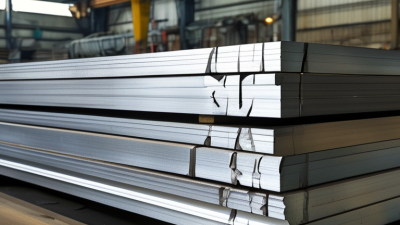
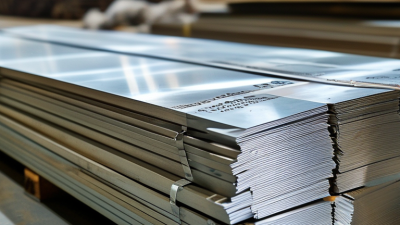
Plate thickness commonly ranges from 3 millimeters to more than 100 millimeters. Thin plates suit covers, tanks, and fabricated panels. Heavy plates support pressure equipment, structural frames, and demanding industrial parts. Actual availability depends on the grade, mill, and region. Thickness tolerance matters, especially when machining or welding. Nominal size is not always the delivered size.

Standard dimensions often include 1,000 × 2,000 mm, 1,220 × 2,440 mm, 1,500 × 3,000 mm, and larger formats. Metric and imperial markets may use different conventions. Some suppliers cut plates to project dimensions, reducing waste but adding processing marks. Buyers should confirm flatness, edge condition, surface protection, and inspection documents. Standards such as ASTM, EN, and JIS define different requirements. Do not treat them as interchangeable. A polished surface may look excellent, yet it can hide waviness or handling damage. I would request a sample or inspection photo before approving a large order. That extra check often prevents expensive rework.

This chart compares ten widely used stainless steel plate grades by the upper end of their commonly stocked thickness range. Typical finishes include 2B, BA, No. 1, No. 4, and polished surfaces. Standard plate dimensions commonly include 1,500 × 3,000 mm, 1,500 × 6,000 mm, 2,000 × 4,000 mm, and 2,000 × 6,000 mm; actual availability depends on the applicable ASTM, EN, or JIS specification, mill capability, and order quantity.

How Global Buyers Select the Right Stainless Steel Plate

Top 10 Types of Stainless Steel Plates for Global Buyers

How Global Buyers Select the Right Stainless Steel Plate

Global buyers rarely choose stainless steel plates by grade name alone. They compare corrosion exposure, temperature, forming needs, thickness, and delivery requirements. The common options include 304, 316, 321, 410, 430, 409, 301, duplex 2205, super duplex 2507, and 904L. Each grade solves a different problem.

304 suits general processing equipment and indoor structures. 316 offers stronger resistance in chloride-rich or marine environments. 321 handles elevated temperatures better, while 410 provides useful hardness after heat treatment. Ferritic grades, such as 430 and 409, can reduce cost in suitable applications. Duplex grades provide high strength, but fabrication requires tighter control. No grade wins every project.

Experienced purchasers verify chemical composition, mechanical results, plate thickness, surface finish, and dimensional tolerance. They also request traceable inspection documents and confirm whether testing follows applicable ASTM or EN requirements. A plate may meet the grade but fail the project because its surface finish is unsuitable. Small details matter. Weldability, cutting loss, minimum order quantity, and port delivery time can change the real cost. I would recheck the corrosion assumptions before approving a cheaper option. Salt exposure is often underestimated. One practical mistake is treating “stainless” as maintenance-free; cleaning routines and design drainage still influence service life.

International Standards, Certifications, and Import Considerations

Top 10 Types of Stainless Steel Plates for Global Buyers

International Standards, Certifications, and Import Considerations

Global buyers often compare ten common plate types: 304, 316, 321, 347, 409, 430, 410, 420, 904L, and duplex 2205. Each grade serves different conditions. Grade 316 suits chloride exposure better than 304. Duplex 2205 offers high strength, but welding controls require careful review. Always match the grade with the destination standard, such as ASTM, EN, or JIS. Dimensions, tolerances, surface finish, and testing requirements may differ.

Request a material test certificate before shipment. EN 10204 3.1 documentation commonly shows chemical results, mechanical values, heat numbers, and inspection data. The plate marking should match the certificate exactly. Independent inspection can verify thickness, surface quality, PMI results, and ultrasonic testing when specified. Certificates are useful, but they are not magic. I have seen paperwork look complete while a heat number was missing from one bundle.

Tips: Confirm the HS code, country-of-origin rules, import permits, and local labeling requirements early. Check whether the buyer needs 3.1 or 3.2 certification. Review Incoterms, moisture protection, wooden-packing rules, and port documentation. Ask for photographs of markings and packing before loading. Keep a written tolerance agreement. Small details matter. A freight delay can cost more than a minor price difference. When standards conflict, obtain written clarification from the engineer, inspector, or customs adviser. That extra review may feel slow, but assumptions are expensive.