Choosing the right China Best Cutlery Container Supplier requires more than comparing prices on a product page. Global buyers need dependable materials, stable production, clear communication, and evidence of quality control. A suitable Cutlery Container should protect forks, knives, and spoons during storage and transport. It should also fit drawers, catering stations, hotel rooms, or takeaway packaging systems.
“An effective Cutlery Container protects the product, proves its safety, and fits the buyer’s workflow,” says Ethan Liu, a packaging engineer specializing in food-contact packaging. His observation reflects a practical sourcing reality. A low quotation means little if lids warp, compartments crack, or cartons arrive wet. Small failures become expensive quickly.
Material selection deserves careful attention. Buyers may compare PP, PET, stainless steel, bamboo fiber, and other options. Each material brings different strengths, costs, cleaning needs, and end-of-life concerns. Food-contact documentation should be requested and checked for the destination market. Production samples matter, too. A container can look excellent in photographs but feel weak in the hand.
Supplier evaluation should include factory capacity, mold ownership, inspection procedures, lead times, minimum order quantities, and export experience. Ask for carton dimensions and loading details. They affect freight costs. Custom colors and logos may increase complexity. Sometimes, a simpler design performs better.
No supplier is perfect. Even experienced buyers can overlook packaging damage or inconsistent measurements. This guide examines practical criteria for selecting a reliable Chinese supplier. It focuses on usable evidence, not exaggerated promises, so global buyers can make more confident decisions.
A leading cutlery container supplier in China is defined by more than a polished catalog. In practical sourcing, useful questions begin with materials, tolerances, and factory control. Can the supplier identify resin grades, stainless steel thickness, and food-contact test methods? Are production samples matched against approved drawings? A dependable team records these details before mass production starts. It also explains limitations plainly. That matters.
Experienced suppliers provide a traceable workflow from prototype to shipment. They should share sample dates, inspection points, carton dimensions, and realistic production capacity. A factory visit, live video audit, or independent inspection can reveal details photographs miss: dusty assembly areas, uneven hinges, weak labels, or crowded storage. Quality checks should test lid cycles, load strength, odor, surface scratches, and drop resistance. Results need batch records, not verbal promises. Small deviations still deserve attention. One overlooked millimeter can make a container wobble in a dishwasher or fail on a retail shelf.
Professional communication is another defining signal. A capable supplier asks about utensil sizes, packing methods, destination climate, and expected order frequency. It calculates shipping volume carefully and warns buyers when custom colors or molds may extend lead times. Certifications should be current, relevant, and verifiable through issuing bodies or laboratories. Yet no supplier is perfect. A first sample may expose a loose latch or awkward drainage hole. The right response is documented correction, repeated testing, and honest discussion of cost. Buyers should keep approved samples, inspection criteria, and change records. Trust grows through evidence, not confident language.
A strong upstream stainless-steel ecosystem can support material availability, production scalability, and supply continuity for cutlery containers. The chart shows 2023 crude steel production in selected major producing countries. Buyers should also assess stainless-steel grades, dimensional consistency, food-contact compliance, quality-control systems, packaging, and export experience when evaluating a Chinese supplier.
Source: World Steel Association, World Steel in Figures 2024. Production figures are reported in million tonnes.
China Best Cutlery Container Supplier for Global Buyers?
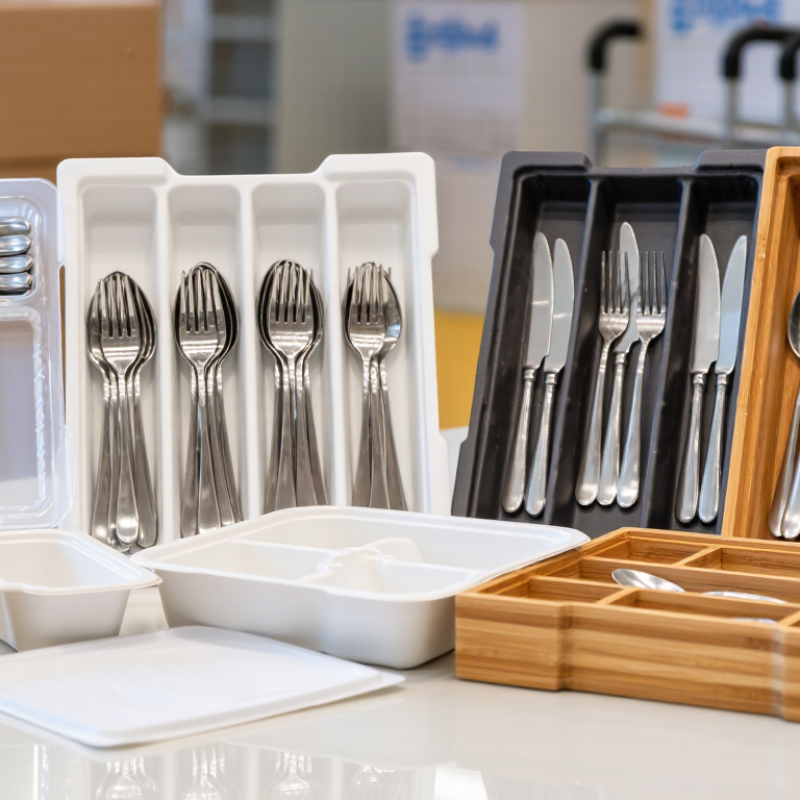
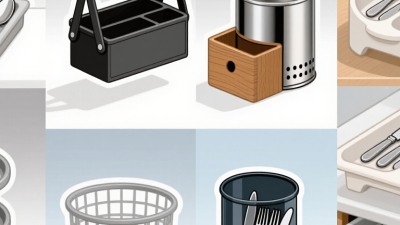
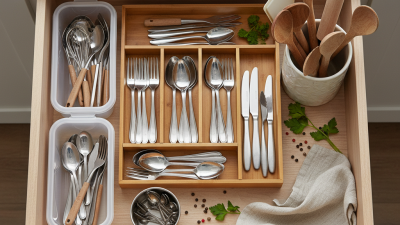
Cutlery containers should match the working environment, not only the product photograph. Countertop containers suit cafés, offices, and home kitchens with frequent serving. They keep spoons, forks, and knives visible and easy to reach. A drawer organizer offers a cleaner appearance for compact kitchens. However, narrow slots may trap moisture after washing.
Wall-mounted containers save valuable counter space in busy food-service areas. They work well near preparation tables, especially when staff need quick access. Multi-compartment bins support buffet stations and dining halls. Separate sections reduce mixing and make restocking faster. Perforated designs can improve drainage. Small details matter.
For outdoor catering or mobile service, lightweight polypropylene containers are practical and easy to transport. Stainless steel options provide stronger impact resistance and a more professional appearance. Wooden containers add warmth in residential settings, but they need careful moisture control. I have found that capacity estimates are often too optimistic. A container that fits ten sets may feel crowded during peak service. Buyers should test actual cutlery sizes, cleaning routines, and storage space before placing large orders. There is no perfect type. The best choice depends on daily handling, hygiene expectations, and available room.
China Best Cutlery Container Supplier for Global Buyers?
How to Evaluate Chinese Suppliers for Global Purchasing
Choosing a Chinese cutlery container supplier requires more than comparing online prices. Request factory registration, production photos, and a current capacity statement. Ask who owns each production step. A reliable supplier should explain molding, trimming, inspection, packing, and export handling clearly. Product samples matter. Check lid fit, wall thickness, odor, edge smoothness, and resistance after repeated washing. For food-contact use, request material specifications and applicable test reports from recognized laboratories. Do not accept copied certificates with unclear dates or product scope.
Tips: Build a small trial order before committing to volume. Measure defect rates, carton strength, delivery accuracy, and response time. Ask for a written inspection standard, including acceptable scratches, color variation, and missing parts. Keep one approved sample with your purchasing records. It prevents later arguments.
Communication reveals operational maturity. Send the same questions to several suppliers, then compare precise answers rather than friendly promises. Verify payment terms, lead times, tooling ownership, and spare-part arrangements in writing. A factory may offer an attractive quote yet struggle with peak-season orders. That risk is easy to overlook. I would also review corrective-action records when available. Every supplier has problems. The important issue is how openly and quickly they fix them. A final video call from the production floor can expose gaps between sales claims and actual capacity.
China Best Cutlery Container Supplier for Global Buyers?
A reliable supplier must prove manufacturing control, not just display polished samples. Grand View Research valued the global cutlery market at approximately USD 1.8 billion in 2023. This growth increases pressure on factories to deliver consistent volume and customization. Experienced manufacturers should document stainless-steel grades, sheet thickness, stamping pressure, polishing stages, and container dimensions. For daily use, 18/0 and 18/10 stainless steel require different magnetic and corrosion expectations. Samples should match mass production.
Quality control needs measurable checkpoints. Inspectors can verify dimensions with calibrated gauges and check surface defects under fixed lighting. Handle alignment, burr removal, weld strength, and lid fit deserve separate records. ISO 2859-1 sampling can support acceptance decisions, while repeated dishwasher testing helps assess finish durability. Food-contact documentation should match the destination market. Grand View Research’s 2024 report also identifies hospitality and household demand as major market segments, making repeatability more important than attractive prototypes. A common weakness remains unclear inspection ownership. It needs correction.
Tips: Request a pre-production sample, material certificate, inspection plan, and carton drop-test record. Specify tolerances in millimeters. Photograph critical details. Never approve only by appearance.
Customization should cover logo placement, compartment layout, colors, foam inserts, and retail packaging. Laser marking may look precise, but poor settings can create rough edges or uneven contrast. Ask for a pilot batch before full production. Some defects will still escape. That is why traceable lot numbers, retained samples, and corrective-action reports matter. A supplier that admits process limits may be more dependable than one promising perfection.
China Best Cutlery Container Supplier for Global Buyers?
Ordering, Compliance, and International Shipping Considerations
Selecting a cutlery container supplier requires more than comparing unit prices. Experienced buyers should request material specifications, production photos, and recent inspection records. Confirm the container’s dimensions with your actual knives, forks, and spoons. A sample packed in a real drawer often reveals problems that drawings miss.
Ask whether the material is suitable for food-contact environments, where applicable. Request test reports for migration, durability, odor, and color stability. Compliance requirements differ by destination, so verify current rules with an independent laboratory or customs professional. The supplier should provide clear invoices, packing lists, carton dimensions, and accurate product descriptions. Vague paperwork creates delays. Sometimes, buyers trust a certificate without checking its issuing laboratory. That is a mistake worth remembering.
Shipping terms must be agreed before production begins. Clarify the Incoterm, port of loading, insurance responsibility, and destination charges. Measure the carton volume carefully; bulky containers can make freight more expensive than expected. Use reinforced export cartons, corner protection, and moisture-resistant packaging for long sea routes. A pre-shipment inspection can check quantity, color, hinges, and carton labels. It costs extra, but one damaged pallet costs more. I have seen buyers approve production from one perfect sample, then discover inconsistent assembly across the batch. Keep a signed specification sheet, approve a production sample, and retain photos for claims.
| Evaluation Dimension | Typical Data or Requirement | What Global Buyers Should Verify | Recommended Order or Shipping Action |
|---|---|---|---|
| Product Scope | Drawer organizers, countertop holders, utensil trays, detachable-compartment containers, and molded or woven storage units. | Confirm whether the item is intended only for storage or for direct contact with food and eating utensils. | Use the intended application as the basis for material selection, testing, labeling, and compliance documentation. |
| Common Materials | Polypropylene (PP), ABS, stainless steel, bamboo, wood, textile mesh, and combinations of these materials. | Request the exact material specification, recycled-content declaration where applicable, colorant information, and surface-treatment details. | Approve a production sample before mass production, especially for mixed-material or coated products. |
| Size and Fit | Dimensions vary according to cabinet width, drawer depth, utensil length, and compartment configuration. | Provide the target market’s required product dimensions, tolerances, usable internal dimensions, and packaging dimensions. | Measure the assembled product and the packed carton; do not rely only on nominal catalog dimensions. |
| Order Quantity | Minimum order quantities are supplier-specific and commonly increase for custom molds, colors, logos, or packaging. | Separate the minimum quantity for standard products from the minimum quantity for custom products. | Ask for price breaks at several quantities and obtain tooling, sampling, and re-order terms in writing. |
| Sampling and Approval | A production-representative sample should be approved before bulk manufacturing. | Check dimensions, fit, odor, color consistency, edge finish, load performance, assembly, and carton protection. | Sign or digitally approve a reference sample and attach measurable acceptance criteria to the purchase order. |
| Production Planning | Standard items generally require less planning time than customized items; tooling and special packaging add additional stages. | Confirm sample time, tooling time, production time, inspection time, and the planned ship date separately. | Build a schedule with approval milestones rather than relying on one total lead-time estimate. |
| Food-Contact Compliance | Application-dependent EU food-contact products may fall under Regulation (EC) No 1935/2004 and relevant material-specific rules, including Regulation (EU) No 10/2011 for plastic materials. | Determine whether the container or its coating directly contacts food or only stores clean utensils. Request a Declaration of Compliance when applicable. | Match testing to the destination market, material, temperature, contact time, and intended food type. |
| United States Requirements | Food-contact articles may need to comply with applicable U.S. Food and Drug Administration requirements, including relevant provisions of 21 CFR. | Verify the regulatory status of each food-contact substance, colorant, adhesive, coating, and additive used in the finished article. | Keep supplier declarations, test reports, formulation information where available, and shipment records for the importer’s compliance file. |
| REACH and Chemical Controls | Products placed on the EU market may be subject to REACH obligations, including restrictions and Substances of Very High Concern communication requirements. | Request a current restricted-substances declaration and assess plastics, coatings, adhesives, dyes, and metal finishes. | Use a written restricted-substances specification and require notification of any material or formulation change. |
| Packaging and Labeling | Retail packaging may require product identity, quantity, importer information, country-of-origin marking, care instructions, and market-specific recycling information. | Check the destination country’s language, measurement, labeling, packaging-waste, and barcode requirements. | Approve artwork before printing and keep packaging specifications separate from product specifications. |
| Wood Packaging | Solid-wood pallets, crates, and dunnage used in international trade generally need treatment and marking under ISPM 15 rules. | Confirm whether the shipment uses solid wood and whether the packaging bears an accepted ISPM 15 mark. | Use compliant wood packaging or specify non-wood alternatives where permitted by the destination country. |
| Quality Inspection | Inspection scope commonly covers quantity, dimensions, workmanship, color, odor, function, packaging, and shipping marks. | Define acceptable quality limits, sampling levels, critical defects, major defects, and minor defects before production. | Arrange pre-shipment inspection after goods are substantially complete and before final payment where commercially appropriate. |
| Carton Data | Key logistics data include units per carton, net weight, gross weight, carton dimensions, carton volume, and pallet configuration. | Verify actual packed measurements because freight charges and container planning depend on volume and weight. | Request a final packing list with carton numbers, dimensions, weights, quantities, and shipping marks. |
| HS Classification | The correct HS code depends on the product’s material, construction, function, and the importing country’s tariff schedule. | Do not select a code solely from a supplier quotation; confirm classification with a customs broker or the relevant customs authority. | Use the confirmed classification consistently on commercial invoices, customs entries, and import records. |
| Incoterms® 2020 | Common arrangements include EXW, FOB, FCA, CIF, and DAP, but each assigns different costs, risks, and responsibilities. | Confirm the named place, transfer of risk, export clearance, main carriage, insurance, import clearance, duties, and local delivery. | Write the selected Incoterms® rule and named place directly into the purchase contract and commercial invoice. |
| Transport Mode | Ocean freight is normally suited to larger, non-urgent shipments; air freight is faster but generally more expensive for bulky goods. | Compare total landed cost, not only the factory price, including freight, insurance, customs charges, duties, and destination fees. | Use LCL for smaller ocean shipments and evaluate FCL when volume, handling risk, or cost efficiency justifies a full container. |
| Shipping Documents | Typical documents include a commercial invoice, packing list, transport document, and any required origin, test, or compliance documents. | Check that product descriptions, quantities, weights, values, HS classification, consignee details, and origin information are consistent. | Review document drafts before vessel or aircraft departure to reduce customs and delivery delays. |
| Payment Protection | Commercial payment structures vary and may include deposits, balance payments after inspection, documentary methods, or trade-assurance arrangements. | Clarify deposit percentage, payment trigger, currency, bank charges, inspection rights, refund conditions, and dispute procedures. | Link the final payment to agreed documentation and inspection results where feasible. |
| Supplier Due Diligence | Useful verification records include business registration, factory or production-site information, quality-system evidence, export experience, and product test reports. | Check whether the contracting entity, manufacturing site, bank beneficiary, and certification holder are consistent. | Use a supplier questionnaire and verify documents independently before placing a high-value order. |
| Change Control | Changes in resin, metal grade, coating, colorant, mold, packaging, or subcontractor can affect product performance and compliance. | Require advance written notice for any material, component, production-site, or packaging change. | Reserve the right to request a new sample or additional testing after a material change. |