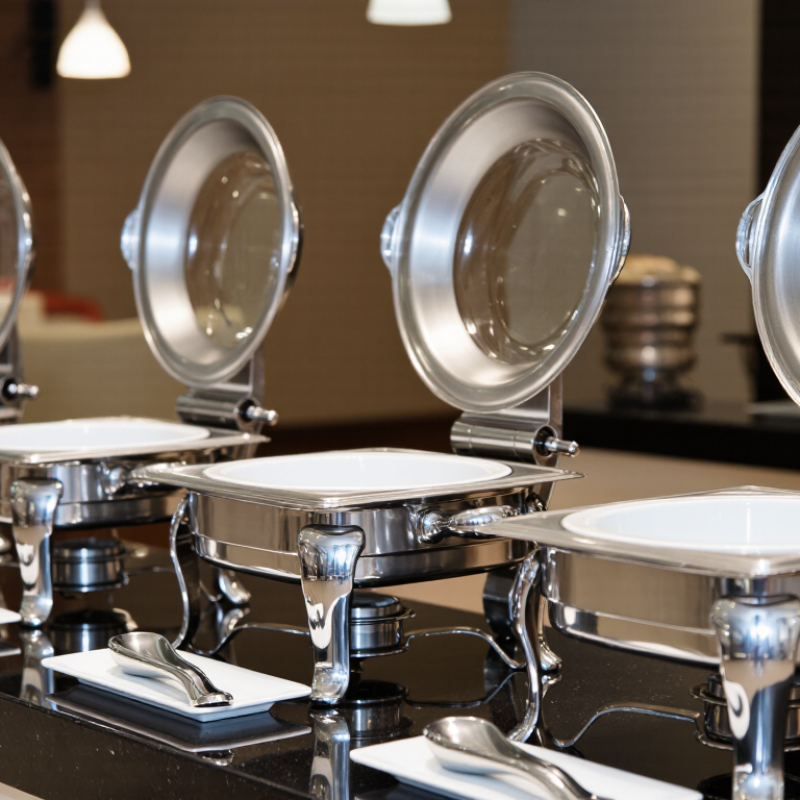
For hotels, caterers, and restaurant-equipment distributors, choosing a reliable Chinese supplier takes more than comparing catalog prices. A Chafing Dish Warmer must hold food at a steady serving temperature, sit securely on a buffet table, and withstand repeated cleaning. Small details matter: a lid that stays open, a smooth hinge, sturdy handles, and a fuel holder that fits properly. These features affect daily service, not just product photos.
As a transparent editorial example, this guide uses a fictional composite specialist, Mei Lin, whose reminder is: “Test the hinge, heat consistency, and cleanup before judging the price.” It is practical guidance, not a verified quotation from a real person. That distinction matters when buyers assess supplier claims. A polished sample may conceal uneven finishing or difficult-to-source replacement parts. Sometimes, even a detailed specification leaves questions unanswered.
This guide examines Chinese suppliers through product range, material and finishing options, customization, sample support, communication, and export experience. It also considers how buyers can check dimensions, packaging, spare-part availability, and quality-control procedures before placing larger orders. Clear answers are useful. So are dated product specifications and consistent sample results. No supplier is perfect, and a low price can bring trade-offs in finish, lead time, or after-sales support. Global buyers can use these comparisons to ask sharper questions and choose a Chafing Dish Warmer supplier suited to their service needs, budget, and ordering plans.
Chafing dish warmers keep prepared food hot during buffets, banquets, and catered events. Common options include fuel-heated water-bath models, electric warmers, and induction-compatible units. Water baths help distribute heat gently, while electric models offer steadier control near power outlets. Fuel-heated units suit mobile service, but staff must monitor fuel and water levels. Small details matter.
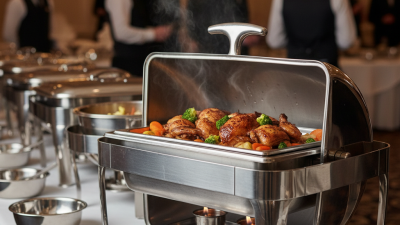
The right format depends on menu and service length. Roll-top lids save space during busy buffet service; lift-off lids are simpler and often lighter. Full-size pans suit main dishes, while half-size pans work for sides and sauces. Look for sturdy hinges, accessible controls, stable legs, and removable pans that clean easily.
The FDA Food Code 2022 sets 135°F as the minimum hot-holding temperature for cooked food. A warmer supports holding, not cooking, so check food temperatures with a calibrated thermometer.
Grand View Research estimated the global food service equipment market at USD 37.98 billion in 2023, reflecting broad investment in professional kitchens.
Tips: Match pan depth to the menu, and test the setup before service. Keep a thermometer nearby. Water levels can be easy to overlook, especially during a long event. One imperfect fit can slow service.
Best Chafing Dish Warmer Suppliers in China for Global Buyers
China’s Chafing Dish Warmer Supplier Landscape
China’s supplier base draws on a large manufacturing ecosystem. UNIDO’s International Yearbook of Industrial Statistics 2024 estimates China produced about 31.8% of global manufacturing value added in 2022. That figure covers manufacturing broadly, not chafing dishes alone. Grand View Research valued the global food service equipment market at USD 37.71 billion in 2023, indicating demand across a wider category. Buyers should treat these figures as context, not proof of any supplier’s quality.
Factories may handle stainless-steel forming, polishing, lid assembly, and packaging, while sourcing heating components separately. Ask for drawings and confirm pan dimensions, steel grade, finish, and heat-source compatibility. Request sample units and inspect lid hinges, handle temperature, and stability on a level table. Small details matter. A warmer can look polished in photos yet arrive with uneven seams or a loose hinge. One gap remains: public market reports rarely separate chafing dish warmers from broader food service equipment. Compare supplier documents, production samples, and test records before placing a volume order.
Illustrative procurement priority weights for global buyers—not measured supplier performance or market-share data. Adjust the weights to match your sourcing requirements.
Product quality and food-contact compliance are essential evaluation areas. Buyers should verify certifications, materials, production capacity, customization options, and delivery terms directly with each supplier.
Suppliers form stainless-steel sheets into lids, water pans, frames, and legs through cutting, stamping, welding, and polishing. A good production team checks sheet thickness and dimensions before forming, since small variations can leave lids sitting unevenly. Welds are inspected for gaps, sharp edges, and residue. The finish matters, too: fingerprints and water spots show quickly on buffet equipment. Details count.
During assembly, workers check hinge movement, handle attachment, and pan fit by hand. This practical check catches issues that a drawing may miss. For fuel-heated models, the holder should sit securely beneath the pan; electric versions need checks on wiring, controls, and heat distribution. Suppliers should link inspection records to production batches, rather than relying only on a final visual review. Records help buyers trace recurring defects.
Testing should reflect real service. A sample unit can be filled to its working level, heated, and monitored for temperature stability, leaks, wobble, and lid operation. Inspectors may repeat the cycle after cooling, because joints and finishes can behave differently when hot. Packaging also deserves a drop or vibration check before shipment. No test catches everything. Ask for test methods, acceptance limits, and recent reports, then compare them with destination-market requirements. I would still inspect a pre-shipment sample; paperwork can look tidy while small flaws remain.
| Manufacturing or Quality Area | Common Practice | What Buyers Should Check | Useful Evidence or Test Record |
|---|---|---|---|
| Product configuration | A typical chafer set may include a frame, water pan, food pan, lid, and fuel-holder assembly. Some models use electric heating instead of canned fuel. | Confirm the heating method, included components, pan capacity, lid style, and whether replacement parts are available. | Approved drawings, bill of materials, product specification, and a signed sample reference. |
| Stainless-steel selection | Food pans and exterior parts may be made from grades such as 304 or 201 stainless steel. Grade choice affects corrosion resistance, cost, and suitability for the intended environment. | Identify the steel grade for each component rather than relying on a general “stainless steel” description. Specify the grade in the purchase order. | Material declarations and, where contractually required, supplier mill certificates or independent material verification. |
| Sheet-metal forming | Flat sheet is commonly cut and formed by processes such as stamping, bending, and drawing to produce pans, lids, and supporting parts. | Check for consistent shape, smooth edges, uniform fit, and no visible cracks, deep dents, or deformation. | In-process inspection records and measurements against the approved product drawing. |
| Joining and assembly | Components may be assembled with spot welding, other suitable welding methods, fasteners, or formed joints, depending on the design. | Inspect joints for secure attachment, sharp projections, excessive gaps, and signs of overheating or poor finishing. | Assembly inspection checklist and production sample review. |
| Surface finishing | Common finishes include polished, brushed, or matte surfaces. Finishing requirements depend on the specified appearance and product construction. | Compare finish and color across components; check accessible edges and contact areas for burrs or rough spots. | Approved finish sample, visual inspection criteria, and pre-shipment inspection photographs. |
| Dimensions and fit | Finished pans, frames, lids, and holders should match the approved design and fit together as intended. | Agree on critical dimensions and tolerances before production. Check lid alignment, pan seating, and component interchangeability where relevant. | Dimension report using suitable measuring tools, referenced to the approved drawing. |
| Stability and loading | A completed unit can be checked on a level surface for rocking, tipping tendency, and secure support under an agreed representative load. | Define the test setup and load with the supplier; verify that the unit remains stable during normal intended use. | Recorded test conditions, load details, observations, and pass/fail criteria agreed before testing. |
| Water-pan and food-pan checks | Water pans can be inspected for leaks, and food pans can be checked for deformation and proper seating. Test methods should reflect the product design. | Confirm that pans hold their intended contents without unacceptable leakage and that they remain properly supported in the frame. | Leak-check record and fit inspection against the approved sample or specification. |
| Lid and hinge operation | Hinged or removable lids are checked for smooth movement, secure attachment, and interference with adjacent parts. | Agree on an operating-cycle test if repeated opening and closing is important to the application. | Functional inspection record, including any agreed cycle count and observed defects. |
| Fuel-holder assembly | For fuel-heated models, the holder should fit its intended fuel container and remain securely positioned in the designed location. | Check clearances, retention, and safe access for insertion and removal. Use only the fuel type and operating instructions specified for the product. | Fit and assembly inspection; review of product instructions and applicable destination-market requirements. |
| Electric heating models | Electric versions require additional electrical and thermal evaluation; applicable requirements depend on the product design and sales market. | Request evidence for the exact model and destination market. Do not treat mechanical inspection as a substitute for electrical safety evaluation. | Model-specific test reports and conformity documentation from an appropriately qualified testing or certification body, where required. |
| Food-contact documentation | Food-contact suitability depends on the materials, coatings, intended use, and destination-market rules. | Request documentation that identifies the tested or declared components and the relevant market requirements; verify that it matches the ordered product. | Applicable material declarations or test reports for the specified product and its food-contact parts. |
| Packaging and shipment inspection | Packaging is selected to protect the unit and finish during handling and transport. Final checks commonly include product count, accessories, labeling, and carton condition. | Approve packaging requirements and shipping marks in advance; inspect a packed sample for protection and completeness. | Packing list, carton specifications, final inspection report, and shipment photographs. |

Note: Manufacturing methods and inspection criteria vary by product design, order specification, and destination market. Agree on measurable acceptance criteria and required documentation before production; no single test list applies to every chafing dish warmer.
When evaluating chafing dish warmer suppliers, compare the actual specifications, not just catalog photos. Ask for dimensions, pan capacity, heating method, and details about food-contact materials. For electric models, check power requirements and temperature control; for fuel-heated units, ask how the holder is secured. Confirm which documents are available for your destination market.
Small details matter. Request a sample and inspect its hinges, edges, lid fit, and finish. Set it up as staff would during service. Does it wobble on a crowded buffet table? Is the water pan easy to remove and clean? A polished catalog can still leave these practical questions unanswered. Testing one unit takes time, but it may reveal issues that specifications miss.
Compare quotations against more than unit price. Include packaging, minimum order quantity, production time, spare-part availability, and shipping terms. Ask how defects are recorded and resolved, and request recent production photos or a video call from the workshop. Clear answers are useful evidence, though they do not replace a sample inspection. No checklist catches everything. Record unanswered questions too; buyers sometimes overlook them when a supplier responds quickly.
For international buyers, sourcing a chafing dish warmer from China starts with a precise request, not just a unit price. Specify capacity, pan dimensions, steel grade, lid style, heat source, and the number of sets per carton. Ask for a sample and a packing specification before confirming a production run. Small details matter: a loose lid can rattle in transit, while a shallow water pan may not suit your service setup. Samples help, but they do not guarantee every production unit will match perfectly.
Export timing deserves equal attention. The World Bank’s Logistics Performance Index 2023 reports an average of 44 days for goods to move from an exporter’s warehouse to an importer’s, with about 60% of that time at sea. UNCTAD’s Review of Maritime Transport 2024 says seaborne trade grew 2.4% in 2023. These figures are broad logistics indicators, not promised delivery times for kitchenware. Confirm production lead time, port, shipment terms, and buffer stock with your supplier and freight forwarder. Delays happen.
Customization may include logo-free packaging, carton dimensions, handles, or accessories. Request material details and test documents relevant to your destination market; requirements can differ. Confirm the tariff classification with a customs broker, rather than relying on a supplier’s estimate. Check that the invoice, packing list, and shipping marks match. Easy to overlook. A pre-shipment inspection can catch dents, missing parts, or inconsistent finishes, though it adds cost and time.