Reliable catering equipment matters when food must stay warm through a long service. A Stainless Steel Chafer may look simple, yet its lid, hinges, water pan, fuel holder, and frame all affect daily use. Buyers also need to consider cleaning, replacement parts, finish quality, and how easily staff can move each unit. Small details show up on busy tables.
Industry data offers useful context, though it does not measure chafer sales directly. Grand View Research estimated the global food service equipment market at about USD 37.5 billion in 2023, with projected growth through 2030. World Stainless reported global stainless steel melt shop production of 58.4 million tonnes in 2023. These figures point to a large equipment sector and a substantial materials industry, not proof that every product or supplier meets the same standard. That distinction matters.
For buyers comparing manufacturers in China, practical evidence is more useful than broad promises. Ask about steel grades, weld consistency, lid fit, surface finishing, packaging, and quality checks. Request product drawings or samples where possible, and confirm whether replacement parts can be supplied. A polished sample is not the whole story. Real service conditions can reveal weak hinges or awkward cleaning points. No manufacturer is beyond review, and even a capable factory may need clearer specifications from the buyer. This guide looks at the features, production capabilities, and supplier questions that help businesses assess a Stainless Steel Chafer manufacturer with care.
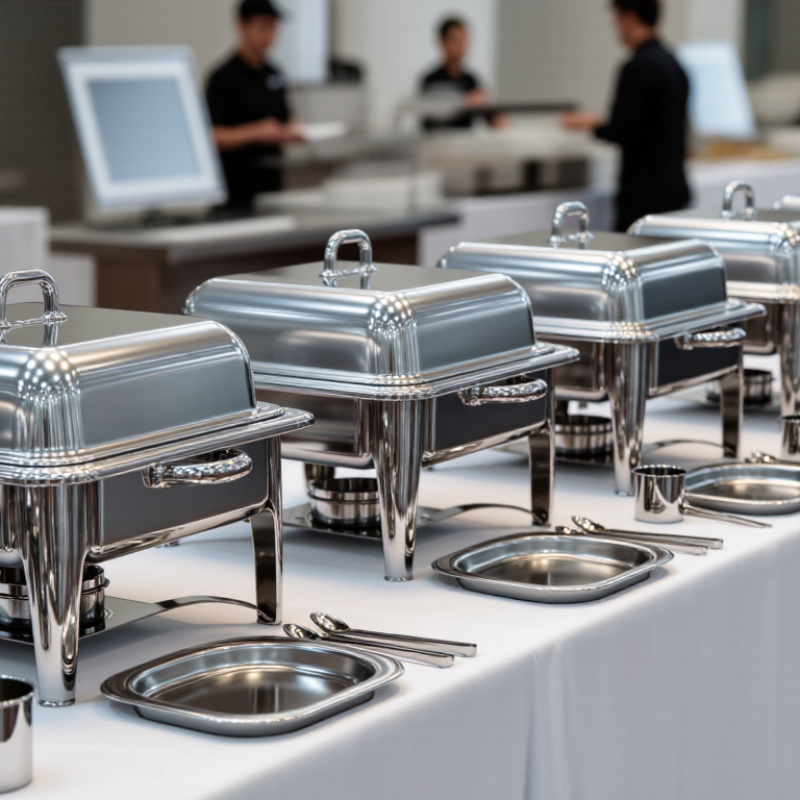
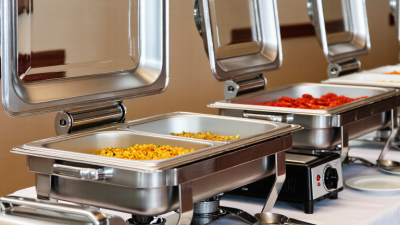
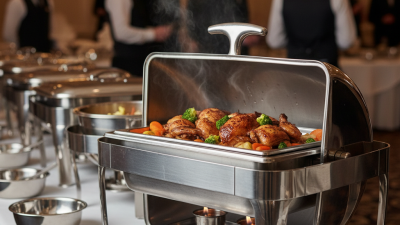
A stainless steel chafer keeps prepared food warm during buffet and catered service; it is not designed to cook food. In a traditional water-bath model, a water pan sits between the heat source and food pan, helping spread heat more gently. The lid retains warmth and limits exposure, while the frame supports the pans and keeps them above the burner or heating element.
Small details matter. The FDA Food Code 2022 sets 135°F (57°C) as the minimum hot-holding temperature for time/temperature control for safety foods (Section 3-501.16).
This is a food-safety benchmark, not a guarantee that every chafer heats evenly.
Look for a removable food pan, a stable frame, secure handles, and smooth surfaces that are practical to clean. Stainless steel resists corrosion, but grade and workmanship affect durability. Check seams and edges: rough joints can trap residue, and thin lids may dent during frequent service.
Not perfect. In use, staff should check food temperature with a thermometer rather than relying on steam or touch. Water levels also need attention; a dry pan can lead to uneven heating.
For buyers, the right chafer depends on serving volume, heating method, and how easily its parts can be cleaned and replaced.
China’s chafer manufacturing landscape includes metal-forming workshops, component suppliers, polishing operations, and final assembly teams. Many producers work in coastal industrial regions, where access to materials and shipping services can support larger orders. Production methods vary. Some facilities handle stamping and welding in-house, while others depend on specialist suppliers.
A typical chafer combines a water pan, food pan, frame, lid, hinges, and a heat source holder. Workers form and join the metal, then polish visible surfaces before assembly. Fit matters: a loose hinge can make the lid awkward, while an uneven pan may sit poorly on its frame. Small details count. Buyers should check material documentation, weld quality, edge smoothness, and stability—not just the mirror-like finish. Stainless steel grade and thickness should be confirmed for the intended use.
Manufacturers may offer different shapes, capacities, finishes, and packing options, but customization can add time and complicate consistency across batches. A polished sample is useful, yet it cannot prove every production run will match. That is an imperfect but important distinction. Clear specifications and pre-shipment checks help reduce surprises, though they cannot replace a careful review of the actual goods.
A stainless steel chafer is only as dependable as its material selection. Food-contact surfaces commonly use 304 stainless steel because it resists corrosion and cleans readily. The frame, water pan, lid, and handles may need different thicknesses to balance strength and weight. Material certificates and incoming inspections help confirm the steel grade before production begins. Small details matter.
Sheets are cut, pressed, and formed into pans and covers, then joined by controlled welding. Smooth, even seams reduce areas where food residue or moisture can collect. After welding, workers grind rough edges and polish the visible surfaces. A mirror finish looks refined, but it shows fingerprints easily. A brushed finish can be more forgiving in busy service settings. Fit matters.
During assembly, manufacturers check lid movement, handle security, and the alignment of the water pan with its frame. A sample unit can be filled with water to check for leaks and uneven seating. Surface inspection under clear lighting can reveal scratches that are hard to notice on the production floor. No process catches everything, so recorded checks at several stages are more reliable than a final glance alone.
The chart compares chromium and nickel composition limits for common stainless steel grades used in food-service equipment. Actual chafer material selection depends on the intended use, fabrication requirements, and applicable specifications.
Reliable stainless steel chafer manufacturers control quality from raw material checks to final assembly. They verify the steel grade and thickness, then keep records that can be traced to each production batch. Material certificates matter, but they should match the actual sheets used. Details matter.
Inspect the food pan, water pan, lid, handles, and fuel-holder fit. Smooth, even welds help prevent dirt from collecting in seams, while stable hinges keep the lid from shifting during service. A practical inspection includes opening and closing each lid, checking for sharp edges, and looking for wobble on a level table. Looks are not enough.
Manufacturers should also test heat performance under realistic service conditions. Check that the water pan sits securely and distributes heat without obvious hot spots. Ask how surface finish and cleaning instructions are verified, since harsh cleaning can dull steel over time. A polished sample may hide inconsistent production. Even a careful checklist can miss a small flaw, so repeated inspections and clear records are more dependable than appearance alone.
China Best Stainless Steel Chafer Manufacturer
How to Evaluate a Stainless Steel Chafer Manufacturer in China
Choosing a chafer supplier takes more than comparing prices and polished product photos. Ask for the stainless-steel grade, sheet thickness, and material certificates for the exact model you plan to order. Then inspect a sample under ordinary service conditions. Does the lid stay open steadily? Does the water pan sit flat? Small details matter.
Look closely at seams, handles, and edges that staff touch during setup and cleaning. Smooth, even welds are easier to maintain than rough joints with visible gaps. Request written inspection criteria and recent quality records, not just a verbal promise. A factory review can also check how workers measure dimensions and separate approved goods from unfinished stock. Photos help, but they do not replace a physical sample. Looks can mislead.
Test the chafer with the heating method you intend to use, and check how evenly it holds serving temperature. Ask about spare parts, packaging protection, production lead time, and how defects are handled. Clear answers are a good sign. Vague answers deserve a second look. I would not judge a manufacturer from one perfect sample alone; consistency across a production batch is harder to confirm, so ask how it is measured.
| Evaluation Dimension | Suggested Weight | What to Verify | Useful Evidence or Test | Scoring Guide (0–5) |
|---|---|---|---|---|
| Stainless steel grade and traceability | 20% | Confirm the grade specified for each component. Type 304 stainless steel is commonly used for food-service equipment; type 316 contains molybdenum and may be specified for applications needing greater resistance to certain corrosive environments. The suitable grade depends on use and exposure. | Request a material specification and, where applicable, mill test certificates or other records linking the material to the production lot. Check that certificates match the parts being supplied. | 0: No grade information. 3: Grade is stated and documented. 5: Grade and lot traceability are clear and verified. |
| Construction and finish | 15% | Inspect formed edges, welds, joints, surface finish, and the stability of the frame. Look for sharp edges, uneven polishing, visible defects, gaps that trap residue, or distortion. | Review a production sample and close-up photos. Check dimensions, finish consistency, edge safety, and weld quality against an agreed drawing or sample. | 0: Major defects. 3: Meets agreed sample and drawing. 5: Consistent workmanship with documented inspection results. |
| Food-contact compliance | 15% | Confirm that materials and food-contact surfaces meet the requirements of the destination market. Requirements vary by jurisdiction and may depend on the material, coating, and intended use. | Request applicable declarations, test reports, and material information. For the EU, assess relevant requirements including Regulation (EC) No 1935/2004; for the United States, identify applicable FDA requirements for the specific materials and use. | 0: No relevant documentation. 3: Documentation is available for key food-contact materials. 5: Documentation is relevant to the destination market, product configuration, and intended use. |
| Heating, lid, and handling functions | 15% | Check lid opening and closing, handle security, hinge movement, fuel-holder fit, and stability during normal operation. Confirm that the product is designed for the specified heating method. | Request an operating demonstration or sample test. Review assembly instructions and verify that moving parts work smoothly without looseness or interference. | 0: Unsafe or nonfunctional. 3: Functions work as specified. 5: Functions are tested and supported by clear operating instructions. |
| Pan size and compatibility | 10% | Verify the chafer’s usable pan dimensions, depth, and included accessories. If the product is designed around Gastronorm pans, confirm the stated size against the relevant dimensional standard, such as EN 631-1. | Compare a dimensioned drawing with the actual pan and chafer. Common GN footprints include GN 1/1 at 530 × 325 mm and GN 1/2 at 325 × 265 mm; confirm the exact fit and depth for the order. | 0: Size is unclear or incompatible. 3: Dimensions are documented and fit is checked. 5: Compatibility is verified with the specified pan and accessories. |
| Quality control and inspection | 10% | Ask how incoming materials, in-process work, and finished products are checked. Confirm how defects, rework, and corrective actions are recorded. | Request an inspection checklist or sample inspection report. A quality-management certificate, if provided, should be checked for scope and validity; it does not by itself certify a specific product. | 0: No clear inspection process. 3: Routine checks are described and recorded. 5: Checks are documented at multiple stages and tied to corrective actions. |
| Customization and production capability | 5% | Confirm whether the manufacturer can meet the required dimensions, finish, packaging, and accessories. Clarify which changes affect tooling, minimum order quantity, or delivery timing. | Request a reviewed drawing, sample, or written specification before approving production. Confirm that changes are recorded in the order documents. | 0: Requirements cannot be confirmed. 3: Requirements are documented and feasible. 5: A sample or approved drawing confirms the requested configuration. |
| Capacity and delivery planning | 5% | Assess whether the supplier can provide a realistic schedule for samples, production, inspection, and shipment. Lead times and capacity depend on the product, order quantity, and current production load. | Request a dated production schedule, order milestones, and written confirmation of shipment terms. Compare the plan with your required delivery date. | 0: No workable schedule. 3: A schedule is provided. 5: Milestones, capacity assumptions, and delay communication are clearly defined. |
| Quotation and commercial clarity | 5% | Check that the quote identifies the product specification, included parts, packaging, order quantity, payment terms, delivery terms, and any extra charges. | Compare itemized quotations on the same specification and delivery basis. Confirm how changes, replacement parts, and warranty claims are handled. | 0: Material terms are missing. 3: Main costs and terms are stated. 5: Scope, exclusions, responsibilities, and after-sales terms are clear in writing. |

| Total suggested weight | 100% | Use the weights as a comparison framework, then adjust them to match your product requirements and destination market. | ||
Suggested scoring method: Rate each dimension from 0 to 5, multiply the rating by its weight, and add the weighted results. Treat missing evidence as unverified rather than assuming the requirement is met. Confirm final specifications and compliance documents for the exact product and order.