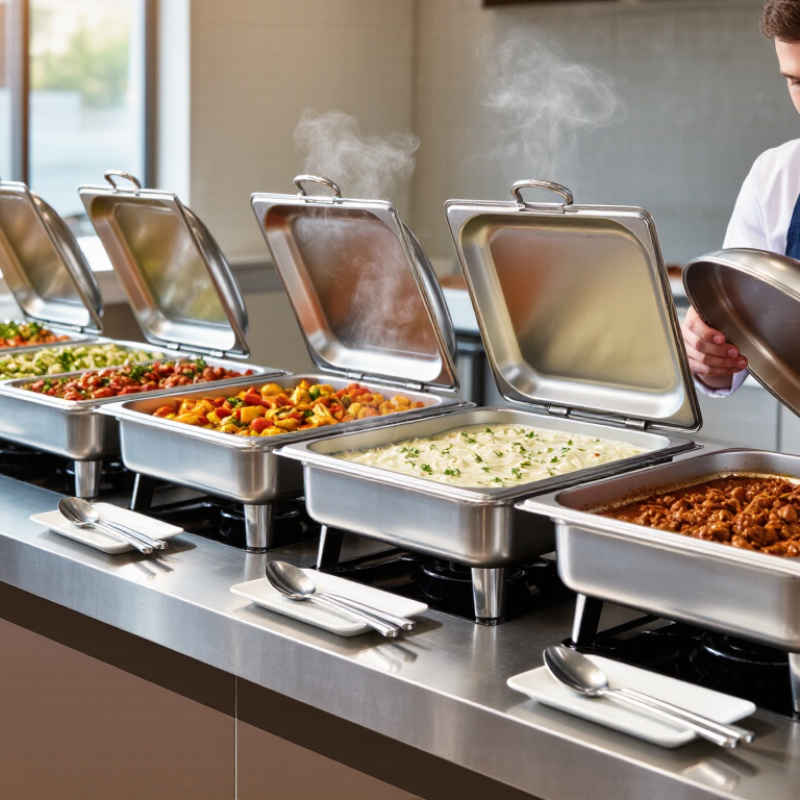
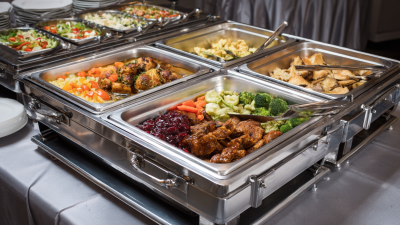
A well-chosen Buffet Food Pan does more than hold food. It protects texture, supports safe service, and keeps a buffet line visually inviting. A shallow pan may suit roasted vegetables, while a deeper pan can protect sauces, rice, or stews from drying too quickly. Small choices matter.
Chef Thomas Keller, a respected authority in professional culinary operations, offers a useful reminder: “A recipe has no soul. You, as the cook, must bring soul to the recipe.” The same principle applies to buffet equipment. The pan cannot fix careless preparation, weak temperature control, or poor replenishment. It can, however, help a trained team serve food with greater consistency.
This guide explores seven practical tips for choosing the right Buffet Food Pan. It considers pan depth, material, capacity, heat compatibility, cleaning demands, lid design, and service style. Stainless steel may provide durability and a polished appearance. Aluminum can reduce weight and improve heat response, but it may not suit every heating system. Check manufacturer specifications carefully.
Think about the real service line. A crowded breakfast station needs compact pans and quick refills. A banquet dinner may require larger capacities and secure lids. Guests notice details. They notice dried edges, messy spills, and empty corners.
There is no perfect pan.
Even experienced teams get this wrong. I have seen attractive pans create awkward serving angles or waste valuable counter space. A reflective finish can also reveal fingerprints after one busy hour. The best choice balances appearance, performance, safety, and maintenance. These seven tips provide a practical starting point, but your menu and service conditions should make the final decision.
7 Tips for Choosing the Right Buffet Food Pan
GN 1/1 is the practical baseline for many buffet layouts. Its footprint measures 530 × 325 mm. This standard size fits common hot wells, refrigerated counters, and transport systems. However, footprint alone does not determine service capacity. A 65 mm-deep pan holds roughly 11.2 litres before allowing for food displacement. A 100 mm pan holds about 17.2 litres, while a 150 mm pan reaches approximately 25.8 litres. Actual usable volume will be lower. Ladles, garnishes, and empty corners take space.
Match depth to demand, not habit. For a busy lunch service, a deeper pan can reduce refilling frequency. For delicate foods, a shallower pan may protect texture and presentation. The Food Waste Index Report 2024 estimated that 1.05 billion tonnes of food were wasted in 2022. Food service contributed a significant share of that waste. Oversized pans can quietly increase leftovers. Smaller pans, replaced more often, may control exposure and waste more effectively.
Keep temperature in view. The 2022 FDA Food Code recommends holding hot time-temperature controlled foods at 57°C or above, and cold foods at 5°C or below. Local requirements may differ. A deep pan can slow heat transfer, especially when the well is poorly filled. I have seen attractive displays fail because the pan was simply too deep. Measure peak portions per hour, not only total attendance. Then test one service period, record refills, and adjust. The first estimate may be wrong. That is useful evidence.
7 Tips for Choosing the Right Buffet Food Pan
I used to judge food pans by shine alone. That was a mistake. A polished surface can hide pitting, rough welds, or weak corners. For busy buffets, choose 18/8 stainless steel, commonly identified as Type 304. It contains about 18% chromium and 8% nickel. Chromium forms a passive protective layer, while nickel improves corrosion resistance and durability. The U.S. FDA Food Code 2022 requires food-contact surfaces to resist corrosion, remain smooth, and support effective cleaning. These requirements make material selection a safety decision, not merely a style preference.
Check the pan under strong light. Look for deep scratches, pinholes, and uneven seams. EHEDG hygienic-design guidance often references a product-contact surface roughness of Ra 0.8 μm or lower. Smoother surfaces give residue fewer places to remain. NSF/ANSI 2 also evaluates commercial food equipment for sanitation and cleanability. Still, 18/8 steel is not invincible. Concentrated salt, acidic sauces, and chlorine-based cleaners can damage its passive layer. Rinse chemical residue quickly. Dry the pan before stacking it. I sometimes overestimate stainless steel’s toughness, especially after seeing years of service. That assumption needs checking. A small rust spot deserves attention, because repeated moisture and abrasion can enlarge the damage.
| Tip | Selection Dimension | Recommended Specification or Check | Why It Matters | Practical Verification |
|---|---|---|---|---|
| 1 | Choose a suitable stainless-steel grade | Look for 18/8 stainless steel, which contains approximately 18% chromium and 8% nickel. This composition is commonly associated with austenitic 304-type stainless steel. | Chromium helps form a passive protective layer, while nickel improves corrosion resistance and supports a durable, non-porous surface suitable for food-contact equipment. | Check the product specification or material declaration. Do not rely only on a polished appearance or the term “stainless steel.” |
| 2 | Check corrosion resistance | Select a pan with a smooth, well-finished interior and no visible rust, pitting, deep scratches, or discolored weld areas. | Buffet pans may be exposed to moisture, salt, acidic sauces, detergents, and repeated washing. These conditions can accelerate surface corrosion when material or finishing quality is poor. | Inspect the interior, corners, rim, handles, and welds. Avoid products with rough crevices that can retain food residue or cleaning chemicals. |
| 3 | Match the pan to the serving capacity | Use standard gastronorm dimensions where compatible: GN 1/1: 530 × 325 mm, GN 1/2: 325 × 265 mm, and GN 1/3: 325 × 176 mm. Common depths include 65, 100, 150, and 200 mm. | Correct sizing improves compatibility with buffet wells, chafing dishes, hot-holding cabinets, lids, and transport systems. | Measure the external length, width, and depth before purchasing. Confirm that the pan fits the equipment opening and allows space for handles or lids. |
| 4 | Consider heat performance | Choose a pan designed for the intended application, such as hot holding, cold display, oven use, or refrigerated service. Confirm the manufacturer’s stated temperature limits for the pan and accessories. | Stainless steel transfers heat efficiently and tolerates normal food-service use, but the complete setup may include lids, seals, handles, or coatings with different limits. | Never assume that a pan is suitable for direct flame, induction, microwave use, or a specific oven temperature without written confirmation. |
| 5 | Support safe food holding | For temperature-controlled service, maintain hot food at or above 60°C (140°F) and cold food at or below 5°C (41°F), subject to local food regulations. | A food pan does not control food temperature by itself. Proper equipment, preheating or chilling, portion depth, monitoring, and safe handling are also required. | Use a calibrated food thermometer and follow the applicable local food code. Do not use visual appearance as a substitute for temperature measurement. |
| 6 | Evaluate cleaning and hygiene features | Prefer a seamless or smoothly welded interior, rounded corners, a level rim, and a non-porous surface without peeling coatings. | Smooth surfaces are easier to wash and sanitize and reduce locations where food particles, grease, and microorganisms can accumulate. | Confirm that the pan is compatible with the intended cleaning method. Avoid abrasive cleaners, steel wool, and chlorine exposure that exceeds the applicable care instructions. |
| 7 | Inspect durability and handling safety | Look for a rigid body, stable rolled rim, secure handles, an even base, and accessories that fit without sharp edges or excessive movement. | A rigid pan resists denting and deformation during stacking, transport, and repeated washing. Secure edges and handles help reduce spill and burn risks. | Place the empty pan on a flat surface, check for rocking, inspect all edges by hand, and test the lid or stacking fit before regular service. |

Important: Food-contact requirements, temperature limits, cleaning procedures, and certification rules vary by jurisdiction and application. Always verify the applicable local regulations and the complete product specification before purchase.
A 65–100 mm pan depth often gives buffet service a practical middle ground. A 65 mm pan suits fast-moving foods, such as vegetables, rice, and breakfast items. Food stays easier to reach, especially during busy lunch periods. A 100 mm pan holds more portions and reduces refill frequency. However, deeper pans can slow heat recovery when staff add cold food. The best choice depends on turnover, not appearance.
Check the serving line before ordering pans. Measure the well, lid clearance, and available storage space. Match the pan depth to your heating equipment’s water level or heating plate. Keep hot food at safe temperatures with calibrated equipment and regular checks. Avoid overfilling, since crowded food cools unevenly and spills during service. Smaller batches may look less impressive. They often serve better.
Consider the food’s texture and serving tools. Thick sauces need enough depth to prevent splashing, while delicate pastries may need a shallower pan. Use solid pans for moist dishes and perforated options only when drainage is genuinely useful. I once selected deeper pans to reduce refills, but the last portions became difficult to reach. That decision needed more testing. Observe actual service speed for several days, then adjust pan depth, batch size, and refill timing.
The 2022 FDA Food Code requires potentially hazardous food to stay at 135°F (57°C) or above during hot holding. A suitable buffet pan supports that target without creating cold corners. Check the pan’s depth first. Deep pans may protect food volume but can slow heat penetration. Shallow pans often maintain temperatures more evenly. Test both.
Choose pans that fit the heating well closely. Gaps can allow heat to escape around the edges. Inspect the material, lid design, and rim stability. A warped pan can expose food to uneven temperatures. Use a calibrated thermometer at the center and coolest area. Not just the surface. Record readings during service, especially after refilling.
The CDC estimates that foodborne illnesses cause about 48 million illnesses and 128,000 hospitalizations annually in the United States. Those figures make temperature control more than a purchasing detail. They make it an operational safeguard. Look for pans that are easy to clean, free from deep scratches, and practical for frequent handling. A pan that performs well empty may struggle when filled. I have learned that assumption is risky. Verify performance with real food, real lids, and a busy service line. Check temperatures at regular intervals, following your local authority’s procedures and the FDA Food Code requirements.
Choosing seven buffet pans should begin with the lid, not the discount. A hinged lid can reduce exposed food contact, but it needs enough clearance for serving utensils. Roll-top designs are useful in busy lines, although their hinges may trap grease. I once selected attractive lids that struck the sneeze guard. That mistake cost more than expected. Check the open height, handle temperature, and cleaning access on a working counter.
The FDA Food Code 2022 requires hot-held time/temperature control foods to remain at 135°F or above. Cold foods should stay at 41°F or below. Lids support this control by limiting heat loss and contamination, but they cannot replace temperature checks. The CDC estimates 48 million foodborne illnesses in the United States each year, based on its 2011–2017 data. Small design choices matter. Test one filled pan before purchasing seven.
Confirm pan compatibility with the chafer, induction base, steam table, and existing inserts. A standard hotel pan may fit one well but sit too low in another. Measure length, width, depth, rim shape, and corner radius. Handles should remain cool enough for normal service and strong enough for a full pan. Stainless steel is practical, yet thin metal can warp after repeated heating. That detail is easy to overlook. Record actual measurements, not only catalog sizes, and ask whether replacement lids and handles remain available.